

Cotton crop uses 3% of the world's cultivated land yet uses 24 % of the world's insecticides, more than any other single major crop.
Toxic Pesticides
Many of the chemicals used in cotton production are carcinogenic substances that damage our nervous system. The pesticides settle in the fibers of the cotton, do not disappear by washing and easily absorbed by our skin. Despite all this, cotton is the most preferred raw material in fabric production. According to a study conducted by the US Department of Agriculture, 38,000 tons of insecticide were sprayed onto cotton grown in 2000. The insecticides contain 60 times more toxic substances than DDT, and EPA (American Environmental Protection Agency) explained that 7 of the 15 types of pesticides used are carcinogens.
Common Pollution
Unfortunately, less than 10% of the chemicals sprayed on cotton are used to protect the cottons from insects, while the remaining chemicals are absorbed by plants, air, soil and ultimately our bodies. These highly toxic chemicals sprayed from the air spread to the environment, poisoning agricultural workers, polluting the air, surface and groundwater, and causing ecosystem imbalances.
Damage to Natural Life
As the insects develop resistance against the drugs over time, the amount of pesticides used in cotton plantation is increasing every year, resulting in major ecological catastrophes and loss of crops. It is estimated that 2 million birds die annually in the world due to the pesticides. Today, production from genetically modified cotton seeds accounts for 75% of the world's cotton production.
Cotton in Food Chain
If your daily eating habits include ready-made snacks, chips, mayonnaise, ready-made salad dressings, you may be unwittingly eating “cottonseed oil” . Cotton is not only used as raw materials in our clothes, but also used as oil in many food products in the ready- made food sector. In Turkey, cotton oil is generally used in the production of margarine as for raw material for fat (2) and is the the third most consumed vegetable oil after sunflower and soybean oil (3). Refined cottonseed oil is preferred by locals because it gives better results than other oils in its use for frying purposes (4). Cotton seeds are also used as animal feed.
These all are indications of the big dangers we are facing.

Chemicals used in Textiles
Various hazardous chemical products are used in the dying, printing and manufacturing process of the conventional textiles items. Organic textile products do not contain these chemicals, so are very important for human health.
Chemicals
- Aromatic Solvents
- Chloro-Phenols
- APEO, EDTA, DTPA and similar persistent complexing agents
- Active Detergents
- Flourcarbones
- Genetically modified organisms (GMO's)
- Ammonium compounds
- Formaldehyde and other short chain aldehydes
- Heavy metals
- Azo Dyes
Other Toxic Chemicals
- R40 ( limited evidence to carcinogenic effect)
- R45 ( may cause cancer )
- R46 (may cause heritable genetic damage )
- R49 ( may cause cancer by inhalation )
- R60 (may impair fertility )
- R61 (may cause harm to the unborn child)
- R62 (possible risk of impaired fertility )
Why Organic Cotton?

The term organic describes the products of agriculture that use no pesticides or synthetic fertilizers. Organic cotton is a clean, sustainable alternative to conventional cotton.
What is Organic Cotton?
Organic methods consider the whole eco system and use natural techniques to assist plant growth, repel pests and protect and encourage wildlife habitats. No toxic chemicals are used in processing and manufacturing of organic cotton products. It is produced by farms where no synthetic chemical pesticides, herbicides and fertilizers have been used for at least three years. Instead of using agricultural pesticides, beneficial organisms such as parasites and natural enemies (such as ladybirds against aphids) are used for insect management.
Why Natural?
-As much as 60% of what we put on our skin is absorbed into our bodies, and children are more at risk as their skin is 5 times thinner
-Avoids exposing the body to constant low levels of unnecessary chemicals e.g. Sodium Lauryl Sulphate, parabens, chemical dyes etc
Why Organic?
-Cotton grown naturally has denser fibres producing cloth that is beautifully soft, more durable and holds its shape better - even when washed repeatedly
-Organic cotton saves lives - No pesticides, hazardous chemicals (believed to cause up to a million cases of poisoning a year and 20,000 deaths); so better for farming communities
-No formaldehyde (used as a finish) which can cause rashes, asthma etc - so better for those with allergies, asthma or chemical sensitivities - and means it smells cleaner too!-No nickel in the poppers which can cause skin rashes.
Why Certification?
How can you be sure an organic product is all it claims to be?
Answer: By the help of the certification labels and the numbers that has to exist on the products...
What do the logos on the products mean?
In order a product to be sold as " organic", all the manufacturers in the production process should have a certain internationally recognized certification and all stages of production must be carried out in accordance with the certification criteria. Also, all of these processes should be audited by an independent audit company. By the help of the certifications, the use of synthetic AZO dyes containing heavy metals, the use of chlorine bleach or harmful chemicals in the dyeing process of fabrics can be avoided.
Safe and hygienic working conditions at all the stages of processing and production. There is no forced labor and workers are not required to lodge so-called "identity deposits" with their employer.
Workers are free to leave their job at any time and have the right to join or form trade unions. Child labor is absolutely forbidden, and strictly enforced. Wages and benefits paid for a standard working week meet national labour standards or industry benchmark standards, whichever is higher. Working hours comply with national laws and benchmark industry standards whichever affords greater protection.
Certification
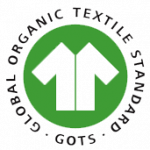
GOTS ( Global Organic Textile Standard) was developed through collaboration by leading standard setters with the aim of defining requirements that are-recognized- world-wide and that ensure the organic status of textiles from harvesting of the raw materials through environmentally and socially responsible manufacturing all the way to labeling in order to provide credible assurance to the consumer. Since its introduction in 2006 the Global Organic Textile Standard has already demonstrated its practical feasibility. Supported by the growth in consumption of organic fibres and by the remarkable demand for unified processing criteria from the industry and retail sector, it has gained universal recognition, enabling processors and manufacturers to supply their organic textiles with one certification accepted in all major markets. With the introduction of the logo and labelling system the GOTS is already visible not only on the shelves of natural textile shops but large-scale retailers and brand dealers as well. This is a milestone in consumer recognition and a strong acknowledgement of our reliable quality assurance concept.
GOTS standards not only represent the cotton production processes but also applies social criteria to both textile processing and farming to promote humane, safe and hygienic working conditions at all the stages of processing and production. There is no forced labor and workers are not required to lodge so-called “identity deposits” with their employer.
Workers are free to leave their job at any time and have the right to join or form trade unions. Child labor is absolutely forbidden, and strictly enforced. Wages and benefits paid for a standard working week meet national labour standards or industry benchmark standards, whichever is higher. Working hours comply with national laws and benchmark industry standards whichever affords greater protection.
The OrganicEra items are certified as organic by ETKO according to the GOTS standards.
You can download the GOTS standards from the below link :
Global Organic Textile Standard (GOTS) Global Standart
Wholesale and Private Label
OrganicEra offers organic cotton products wholesale and private label. OrganicEra is a full service-sourcing agency which supplies private labelled products manufactured in Turkey from GOTS certified suppliers. That means we can put your company logo and labels on the items and customize your orders according to your specifications. OrganicEra follows up all the processes from the receipt of the order until the final inspections. Our product range consists of towels, bed linen, baby and children’s clothing, all kinds of clothing made of knitted fabric, t-shirts, sweatshirts, shorts, socks, sleepwear and toys.
Wholesale items are in stock and ready to ship.
– All the items have OrganicEra logo on the interior neckline.
– The minimum order quantity is 3000 Euros for export. For smaller orders, the customs charges (150 Euro ) is added to the invoice .
– We will be happy to assist you in finding the best quotation for the delivery of your goods.
Do you want to have your own private label organic collection manufactured in Turkey ?
Private labeling enables our customers to create their own branded products; A variety of services are offered through Private Labeling such as: screen-printing, embroidery, custom designs and sizing. We have scalable operations to accommodate the demands of small and large orders. We shall monitor the status of your product on a daily basis from the first stages of development until the produced garments are delivered and address any questions or concerns related to your order. Production will take a minimum of 8 to 10 weeks to complete.
Dying
Our dying processes are eco-friendly, using low-impact AZO and heavy metal free dyes.
Printing and/or Embroidery
We use water based printing, which is sustainable and approved under the GOTS certification. We offer screen- printing, rotary printing and embroidery. Pricing is based on the artwork, quantity and colors.
Packaging
All garments are packaged and protected in PVC free poly bags.

Payment
30% of the purchase is due when an order is a placed. Once the initial payment has been cleared, production will begin. The remaining balance including shipping is due prior to dispatch. All major credit cards are accepted.
Delivery
We work with freight forwarders and clearing agents to provide our customers with either air or ocean freight shipping options. Standard ocean freight requires 35 to 45 days.
Compliance and Certification
All of our organic cotton apparel is produced according the to Global Organic Textiles Standard (GOTS), the most comprehensive international standard for the handling and manufacture of Organic textiles. The GOTS certification process uses an independent third party certifying agency to ensure the "organic status of textiles, from harvesting of the raw materials, through environmentally and socially responsible manufacturing up to labeling in order to provide a credible assurance to the end consumer." Our certification to this standard ensures that custom and private label finished goods may carry the GOTS seal.
We only work with factories who share our commitment to manufacturing quality products and providing a safe and healthy working environment for all employees. We make sure each factory meets all legal, wage, child labor, overtime, health, safety and environmental standards required by the country of manufacture. OrganicEra is very proud to be part of the effort toward global sustainability and for production using the fairest, safest, most humane labor standards available
Please contact nur@organicera.com for pricing details.
FAQ
The dyeing of our yarn and material is done with heavy metal-free colors, which do not contain any harmful chemicals, and are in accordance with the Global Organic Textile standard. Our dyes do not contain PVC (Poly Vinyl Chloride). PVC is a hazardous chemical used in the conventional dyeing process that has been proved to cause kidney failure, developmental delays, and even hearing loss in children. Our aim during the dyeing process is to use only such agents and methods that are environmentally sound and, at the same time, ensure the highest quality standard.
In order to get the very soft feel of our material, the cotton yarn is handled with great care during the knitting or weaving process. All auxiliaries used must either be recyclable or be biodegradable to at least 90%. For example, for the weaving process only natural starch is used.
No, we do not use bleach. Sometimes the cotton harvest of a particular year is more on the yellow side. To achieve our white color we use a natural whitening process, which uses hydrogen peroxide
No, we do not use chemical finishings on our fabrics. One of the most dangerous chemicals found in the finishing of conventional fabrics is Formaldehyde. This is a chemical gas used in the finishing of conventional cotton fabrics. Babies and children are very sensitive to this chemical, and having it on the clothes they wear can cause skin rashes, coughing, and flue like symptoms.
OrganicEra toys are filled with PLA or natural wool. The plush toys which are filled with wool can not be machine washable.Please, do not immerse the wool toys in water-only take a damp cloth with a mild detergent to wash away the spot that needs cleaning. We use PLA (polylactic acid) instead of silicone as a filling material in our rattles. PLA is an innovative material obtained from corn starch. It is also a soft material that absorbs and retains the shape, making it an excellent choice for our organic toys. PLA is made from sugar cane without GMO and does not contain harmful chemicals. In addition, PLA is biodegradable and is a more sustainable alternative to petroleum-based materials. OrganicEra is proud to be the first company in Turkey to use PLA as a filling material.
Use a detergent that does not contain chlorine, phosphate, dyes, or phenols.just all-natural ingredients. There are many brands to choose from, depending on your personal preference.
No, we do not use flame retardant on any of our products.
Our snaps are made of nickel-free copper, according to OEKO-TEX standard 100.